 Public Cash Money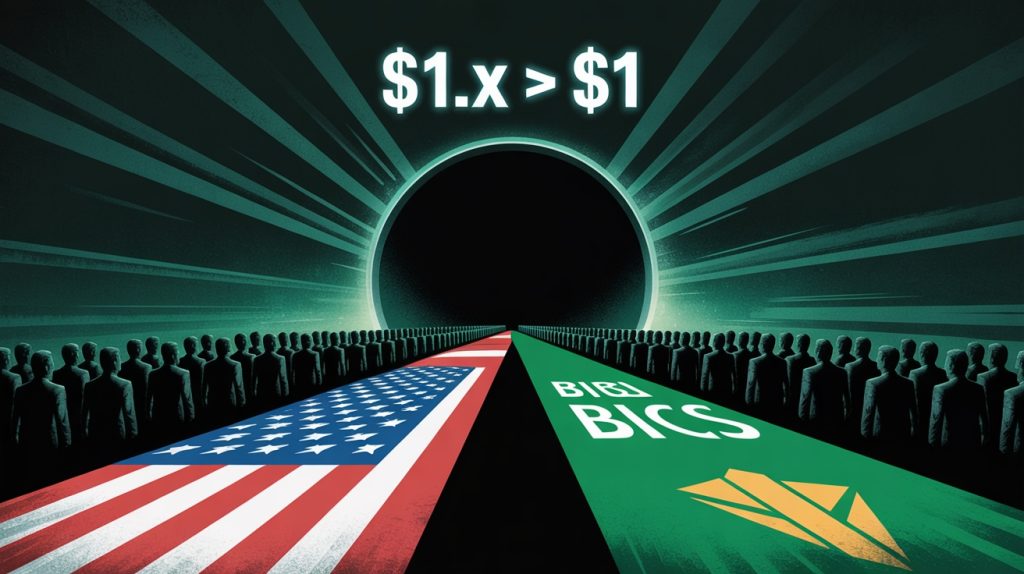
How a Monetary Decision Made in 1944 Became a Death Sentence That Takes 80 Years to Carry Out: the most dangerous feature of a structurally flawed monetary system is not the damage it does immediately. It is the damage it does so slowly that nobody connects the cause to the effect.
The Last Wave · PCM Series · Article 28
The Green Mile: How a Monetary Decision Made in 1944 Became a Death Sentence That Takes 80 Years to Carry Out
The most dangerous feature of a structurally flawed monetary system is not the damage it does immediately. It is the damage it does so slowly that nobody connects the cause to the effect.
In Stephen King’s novel, the Green Mile is the corridor of death row — the stretch of linoleum floor between the cell and the room at the end. The condemned man knows where the corridor leads. The guards know. Everyone knows. And yet they walk it anyway — slowly, with a terrible dignity — because by the time you are on the Green Mile, the decision has already been made. The sentence was handed down long ago. The corridor is just the distance between the judgment and its execution.
In July 1944, at Bretton Woods, New Hampshire, a monetary sentence was handed down. Not deliberately. Not maliciously. By people who believed they were building the foundation of prosperity, not constructing a corridor. But the mathematics embedded in that decision — $1.x > $1, for every x > 0 — contained a terminal logic that no amount of good management, political will, or economic growth could permanently escape.
The corridor is long. Eighty years long. Long enough that the people who signed the sentence are dead. Long enough that their children are old. Long enough that most of the people walking the corridor today have no memory of the room where the decision was made, no understanding of the logic that determined the destination, and no obvious reason to connect the $39 trillion in national debt of 2026 to the conference room in New Hampshire in 1944.
That is the most dangerous feature of a structurally flawed monetary system. Not the damage it does immediately — that would be visible, correctable, politically actionable. The damage it does so slowly, so gradually, so invisibly, that no human mind trained on political cycles of four years and business cycles of ten can trace the line from cause to effect.
1. The Sentence: July 1944
The men who gathered at Bretton Woods in July 1944 were not building a prison. They were building a world. They had just survived the most destructive conflict in human history. They were exhausted, idealistic, and determined to create an architecture that would prevent the monetary chaos of the interwar period from recurring.
What they built was elegant in its simplicity. The dollar, backed by gold at a fixed rate of $35 per ounce, would serve as the global reserve currency. Every other currency would be pegged to the dollar. Trade would be conducted in a stable, universal medium. The world would be anchored.
What they did not build — what John Maynard Keynes proposed and was overruled on — was a system anchored to anything real. Gold was not real in the relevant sense. It was a metal whose supply bore no relationship to the productive capacity of the global economy. Its scarcity was geological, not economic. Its quantity grew at the pace of mining operations, not at the pace of human civilization.
And beneath the gold anchor, invisible to everyone in the room, ran the $1.x design bug that had been embedded in monetary architecture since Venice in 1374: every dollar in circulation was borrowed into existence, carrying an interest obligation that was never issued alongside the principal. The total debt in the system was always, structurally, larger than the total money supply. The system was always consuming itself — slowly, invisibly, with the patience of compound interest applied over decades.
The sentence was the $1.x bug, globalized. Given a reserve currency. Given institutional permanence. Given the legal framework of the IMF and the World Bank to enforce and perpetuate it. The sentence was handed down in 1944. The Green Mile began that July.
2. The Triffin Trap: The Corridor’s Hidden Architecture
In 1960, a Belgian-American economist named Robert Triffin published a paper that identified the structural impossibility at the heart of the Bretton Woods system — and, by extension, at the heart of any monetary architecture in which a single nation’s currency serves as the global reserve.
His observation was precise and lethal. A country that issues the world’s reserve currency faces a permanent dilemma. To supply the world with the dollars it needs to conduct international trade, the issuing country must run persistent trade deficits — it must send more dollars out than it takes in. But persistent trade deficits accumulate debt. And accumulated debt eventually erodes confidence in the currency that everyone needs. Which makes the deficits more expensive to finance. Which accelerates the debt accumulation. Which further erodes confidence.
There is no exit from this loop within the current architecture. If America stops running deficits — if it tries to “live within its means” as a household would — it chokes the global economy of the dollars it needs to function. Trade contracts. Recession spreads. The world demands more dollars. America must supply them. The deficits resume.
If America continues running deficits — if it supplies the world with the dollars the global economy requires — its own debt accumulates faster than its economy can grow. Its interest burden rises. Its fiscal space contracts. Its ability to maintain the military, diplomatic, and economic infrastructure of global hegemony erodes. Gradually. Invisibly. One trillion dollars at a time.
Print and maintain hegemony — but destroy your own people’s purchasing power. Don’t print and maintain purchasing power — but lose hegemony. There is no third option inside the current architecture. This is not a policy failure. It is the mathematical endpoint of a corridor whose direction was fixed in 1944. Triffin saw it in 1960. Nobody in power has acted on it since.
Triffin testified before Congress in 1960. He was polite, precise, and ignored. The system was working — the post-war boom was real, the prosperity was genuine, the corridor was long and the destination was not yet visible from where everyone was standing. Nixon closed the gold window in 1971, not because anyone had finally understood Triffin, but because the gold vaults were physically running out. The corridor shortened. The pace quickened. But the destination remained unaddressed.
Today, sixty-six years after Triffin’s testimony, $39 trillion in national debt, $1.172 trillion in annual interest, and a CBO projection of a debt spiral threshold around 2031 — the destination is visible. Not to everyone. But to anyone willing to look down the corridor.
3. The BRICS Corridor: A New Sign on the Same Door
There is a growing movement among the nations that call themselves BRICS — Brazil, Russia, India, China, South Africa, and their expanding circle of associated states — to construct an alternative to the dollar as the global reserve currency. A BRICS currency, or a gold-backed digital token, or a basket of currencies weighted toward the Global South. Something that removes the “exorbitant privilege” from Washington and distributes monetary power more broadly.
The intention is understandable. The frustration that drives it is legitimate. The structural grievance is real: the current system does impose the costs of American monetary policy on every country that depends on dollar-denominated trade, which is every country on earth. The Triffin Dilemma extracts a genuine tax from the global economy and channels it through Washington.
But here is the question that the architects of a BRICS alternative monetary system have not answered — and may not have asked:
What will the new currency be anchored to?
If the answer is “gold” — we have already walked that corridor. It ended in the 1930s, when gold’s physical scarcity produced deflation, depression, and the political conditions for the Second World War.
If the answer is “a basket of currencies” — a basket of debt-based currencies is still a debt-based system. The $1.x bug runs in renminbi as efficiently as it runs in dollars. It runs in rupees and reals and rubles. The architecture of the bug does not care about the flag on the banknote. It cares only about the relationship between the principal issued and the interest demanded — and that relationship is identical in every debt-based monetary system regardless of which nation issues the debt.
A BRICS reserve currency built on debt is not an alternative to the Green Mile. It is the same corridor with a different sign above the entrance. The destination is identical. The pace may differ. The timeline may shift by decades. But the terminal logic — $1.x > $1, compounding indefinitely, consuming the productive capacity of the nations that service it — is unchanged.
The problem is not who issues the reserve currency. The problem is what the reserve currency is anchored to. A BRICS dollar is still a dollar if it is still borrowed into existence at interest. Passing the sentence from Washington to Beijing does not commute the sentence. It transfers the condemned.
4. Why Nobody Sees the Corridor
I want to address directly the question that this analysis inevitably raises: if the logic is this clear, why has nobody in power acted on it?
The answer is temporal. Human cognition, political systems, and economic institutions are all calibrated for feedback loops that close in years or decades — not in generations. A politician who makes a decision that will cause catastrophic damage in eighty years will be dead before the damage is visible. Their successors will inherit the consequences without understanding their origin. The voters who elected them will have no mechanism to connect the decision to its outcome across the span of a human lifetime.
Consider the timeline. The sentence was handed down in 1944. By 1960, Triffin could see the logic — but the damage was not yet visible to ordinary people. By 1971, the first structural crisis arrived — but it was managed, the corridor continued, the destination receded. By 2000, the debt was $5.6 trillion — alarming to economists, invisible to politics. By 2026, the debt is $39 trillion — visible to anyone willing to look, but the people who signed the original sentence are long dead, their successors have no memory of the decision, and the political system that should respond operates on four-year cycles while the problem operates on eighty-year ones.
There is no conspiracy here. There is a structural mismatch between the timescale of monetary consequences and the timescale of human political accountability. The people who should fix the problem are not the people who created it. The people who created it are not alive to be held accountable. And the people who will pay the final price of the corridor are, today, children — too young to vote, too young to understand, too young to have any voice in the decisions that will determine the length of the corridor they will spend their lives walking.
5. The Door at the End of the Corridor
There is a door at the end of the Green Mile that is not the door everyone assumes is there.
It is the door that was never opened in 1944 — because Keynes, who had designed it, was overruled. The door that was not opened in 1971 — because the people at Camp David were not thinking about architecture, only about tactics. The door that has been visible, in this series, since article one — the door marked Bretton Woods 2.0, P.C.M., E.Q.U.A., Monetary Thermoregulation.
The door is still there. It is still openable. But the Green Mile is not infinite. The corridor shortens every day. Every trillion of new debt added to the $39 trillion narrows the window in which an orderly transition — managed from a position of strength, negotiated multilaterally, implemented gradually as a monetary refinancing rather than a collapse — remains possible.
The lesson of Bretton Woods 1.0 is not that international monetary agreements are impossible. It is that they are possible — but only when the power to convene them exists, only when the intellectual framework to design them is available, and only when the political will to act precedes rather than follows the crisis that makes action unavoidable.
In 1944, the power existed, the intellectual framework existed in Keynes’ Bancor proposal, and the crisis — the war — created the political will. The wrong door was chosen. The Green Mile began.
In 2026, the power still exists — barely, and diminishing. The intellectual framework exists — in this series and in the work of everyone who has followed the mathematics to its logical conclusion. The crisis is visible on the horizon, not yet at the door. The political will does not yet exist — but it is the only missing element.
The condemned man on the Green Mile has a choice that the fictional condemned man does not. He can stop walking. He can turn around. He can open the door that leads out of the corridor rather than the door at the end of it. The choice is real. The window is open. The corridor is shortening.
What the “exorbitant privilege” of 1944 produced was not power. It produced the illusion of power — a temporary advantage that contained, embedded in its own architecture, the mechanism of its own dissolution. Every dollar of privilege extracted since 1944 was a step down the Green Mile. Every trillion of debt accumulated was a meter of corridor consumed. The destination was always there. The logic was always terminal. The privilege was always a sentence.
The question — the only question that matters now — is not whether the corridor ends. It does. The question is whether we reach the end of the corridor, or whether we find the exit before we get there.
The Green Mile is long. It was long enough that the men who built it died before seeing where it led. It is short enough now that their grandchildren can see the end. The exit is still there. It has always been there. It was designed by Keynes in 1944 and rejected by those with more gold than wisdom. The door is marked Bretton Woods 2.0. It opens from the inside. And it requires only one thing to open: the courage to stop walking and turn around. $2+2=4. Period.